in cross-border video live broadcast, choosing the appropriate transit and acceleration solution directly affects the audience experience. this article focuses on "comparative analysis of live video acceleration solutions, which vps transfer machine in thailand has the best stability" and focuses on the network characteristics, common acceleration solutions and stability factors of the transfer machine in thailand. the goal is to help technical leaders and operation and maintenance teams make solution choices that take into account cost and availability without relying on brand information, and improve live broadcast fluency and anti-jitter capabilities.
the core requirements for live video acceleration include low latency, low packet loss, high bandwidth and stable jitter control. as a node in southeast asia, thailand often uses vps transit machines for link tailoring and protocol optimization when facing southeast asian audiences or connecting european and american lines. vps relays usually undertake functions such as rtmp/rtsp/udp forwarding, transcoding, or load offloading. its stability depends on the provider's upstream link, computer room interconnection, and local operator policies. therefore, you need to pay attention to network accessibility and sustained throughput capabilities when selecting.
common solutions include public network cdn acceleration, open source streaming media services (srs/nginx-rtmp), vps transfer and private lines or cloud private networks. cdn is suitable for large-scale distribution but may not be able to eliminate packet loss at the upstream collection end; open source services are flexible but require sophisticated operation and maintenance; vps transfer can be customized with protocol optimization, suitable for regional transfer and scheduling; dedicated lines are the most stable but cost and deployment threshold are high. for the thai scenario, considering cost and delay, vps transfer is often used as the middle layer for acceleration and disaster recovery, but stability needs to be ensured through line and deployment strategies.
packet loss rate, average delay, jitter (delay fluctuation) and link availability should be used as core indicators to evaluate the stability of the transit machine. high packet loss will directly lead to screen freezes or retransmissions, high latency will affect interactivity, and high jitter will require larger buffers, thereby increasing latency. in addition, bandwidth guarantee and burst traffic carrying capacity need to be evaluated in conjunction with mtu, tcp/tls handshake efficiency and udp packet loss recovery strategy. for the thai node, the focus should be on testing the end-to-end performance of the target audience, rather than just looking at the intranet data of the local computer room.
the type of line determines cross-border stability: direct connection to international backbones, interconnection through third parties and backhaul to local isps will produce different performances. it is recommended to adopt a multi-isp or bgp multi-line strategy to reduce the risk of single link failure. for vps transfer in thailand, give priority to computer rooms with good interconnection with major local operators, and select nodes with direct international backbone connections when possible. at the same time, intelligent route switching should be configured to dynamically schedule traffic based on delay and packet loss to ensure automatic switching to a more stable path in emergencies.
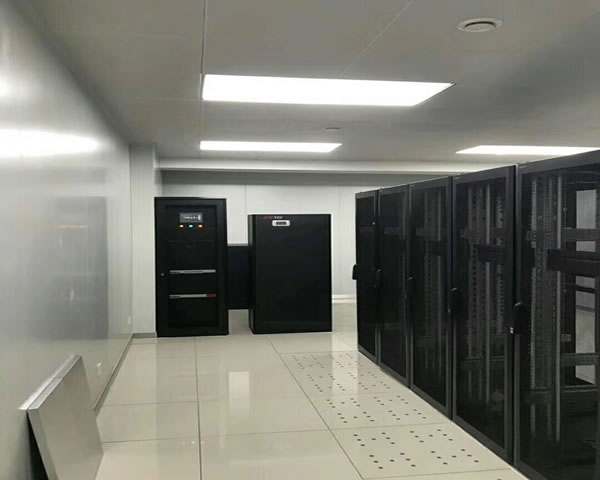
single-point transit deployment is easy to manage but has the risk of a single point of failure, which is not conducive to high concurrency or cross-region distribution. the distributed transit cluster realizes load sharing and nearby back-to-source through multiple thai vps nodes, which can significantly reduce latency and packet loss perception. it is recommended to adopt the nearest access + transit cluster architecture, combined with session persistence and stateless forwarding strategies, to facilitate horizontal expansion and rapid fault recovery. for critical live broadcasts, cross-machine room hot backup can be considered to improve availability and sla achievement rate.
real-time monitoring of coverage link quality, traffic anomalies, and application layer frame loss is key. active detection (ping/icmp/tcp/udp probes) and passive sampling (real user playback indicators) should be deployed, and automated alarms and traffic switching strategies should be set. disaster recovery strategies include multi-path backup, session migration, traffic double-writing and other technologies to ensure rapid switching and minimize interruption time when a node or link is abnormal. operations and maintenance should also regularly practice the failover process to verify the effectiveness of the automation strategy.
the evaluation should be conducted in phases: lab stress testing, link quality testing, and real user experience (rum) observations. the laboratory can verify throughput limits and concurrency capabilities, link tests measure packet loss/delay/jitter, and rum truly reflects audience perception. set sla targets and evaluate based on kpis (video freezing rate, first screen duration, playback success rate). for thailand vps transfer, the test should be repeated in different regions and time periods, and the routing and node distribution should be adjusted according to the facts after collecting statistics.
in summary, the "comparative analysis of video live broadcast acceleration solutions which vps transfer machine in thailand has the best stability" concluded: there is no single best answer, and stability depends on link quality, computer room interconnection and deployment architecture. it is recommended to give priority to multi-node distributed vps transfer, bgp multi-line and real-time monitoring combined with disaster recovery strategies; when feasible, cooperate with cdn sinking and protocol optimization to balance cost and experience. finally, it is emphasized that the final deployment decision is based on real test data and continuous monitoring to ensure the long-term stability of thailand vps transit in the production environment.
- Latest articles
- Enterprise Buying Guide Why Renting A German Server Dedicated Line Is More Reliable Than An Ordinary Line
- Hong Kong Cloud Server CDN Deployment Process And Cost Optimization Practical Guide
- Why Hong Kong Vps Has Natural Advantages In Network Connectivity And Bandwidth Stability
- Achieve Independent Traffic Isolation For Different Business Lines Through Multiple IP Addresses Of US High-defense Servers
- Reliability Evaluation Report Of Vietnam Cn2 Service Provider In Enterprise-level Application Deployment
- A Must-read For Enterprise Users: Which Cloud Servers Are Good In Malaysia And Compared With Service Providers?
- Detailed Malaysia Vps Evaluation Report Helps You Choose Suitable Nodes And Configurations
- Experience Sharing On How To Obtain Better Long-term Discounts Through American Vps Purchasing Agents
- Analysis Of Discounts And Packages Helps You Save Money And Efficiently Complete The Thailand Vps Purchase Decision-making Process
- Technical Manual: How To Deploy US Cloud Server Nodes To Optimize Cross-border Access Experience
- Popular tags
-

How To Choose A Thai Cloud Server With A Limited Budget To Balance Performance And Cost
When your budget is limited, how to choose a Thai cloud server to balance performance and cost. This article offers practical advice from aspects such as business requirements, network latency, instance and storage choices, provider evaluation, and cost optimization strategies. -

How To Purchase Cloud Servers In Thailand To Achieve Efficient Deployment
This article will provide you with a comprehensive guide to efficient deployment of cloud servers in Thailand, including key factors such as selecting a provider, configuring a server, and maintaining. -

The Best Choice For Enjoying Entertainment Experience With Thai VPS
Discover how to use Thai VPS to enhance your online entertainment experience and learn the best tips and suggestions for choosing a VPS.